Welcome!
Dear Prospective Graduate Students,
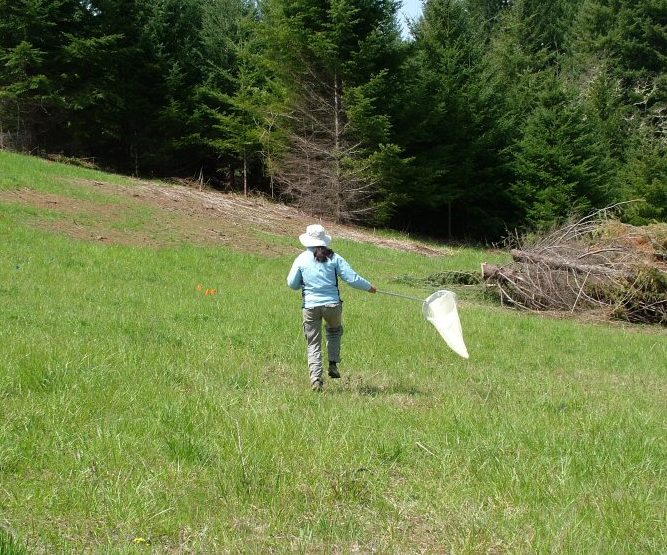
Broadly we use a population ecology lens to gain understanding of the ecology of at-risk species and to develop effective approaches to conservation and restoration. Our work largely focuses on using rare butterflies and their habitats in the Pacific Northwest as a model system to address broad ecological questions to advance conservation on-the-ground. We work closely with federal, state and local agencies as well as non-profit organizations to conduct research which is useful and practical for these organizations while building on a strong foundation in ecological theory. Students from our program have secured career positions with many of these organizations.
We expect independence and maturity from graduate students along with an enthusiasm for their research and active engagement with the scientific literature. We accept student who are capable of excellent graduate-level research, have a record of prior research experience, have strong quantitative skills and have excellent technical writing skills. Competitive applicants have a high GPAs, strong letters of recommendation, and a record of experience conducting ecological research.
If you are interested in this position, please send an email and include the following
– A description of your academic and work background, with particular reference to research and field experience
– What types of research questions you would like to address in graduate school
– Your future goals
– Why you are interested in applying for this position
– Your current resume/CV
– Transcripts and relevant coursework.
– Anything else you think is important.
Washington State University is an equal opportunity/affirmative action educator and employer. We highly encourage members of under-represented groups to reach out. Learn how to apply to graduate programs at WSU Vancouver.
We expect to recruit one or two new MS or PhD students for the upcoming cycle, to start graduate school in Fall 2027 based on newly funded projects. Generally students join the lab in the field season prior to starting graduate school. We also welcome new students who are able to partially support graduate school with external support such as NSF graduate fellowships. If you are planning to apply for these fellowships and interested in being a part of the Conservation Biology lab, we’d love to hear from you.
Regards,
Cheryl Schultz